 , fast delivery, and backed by our world-class customer service every step of the way.
  1-800-881-6093
 Back
Back
The Complete Guide to Amazon FBA Packaging Compliance: How to Avoid Chargebacks and Get SIPP Certified
We talk to a lot of Amazon sellers, and packaging compliance keeps coming up as a pain point. Between the acronyms (SIPP, FFP, SIOC), the testing requirements, and the chargebacks that can hit $4.40 per unit, it's a lot to keep track of.
So we put together this guide to cover Amazon's Ships in Product Packaging program from start to finish: what the requirements actually are, how to get certified, and how to design packaging that passes inspection without sacrificing your brand.
What is Amazon's Ships in Product Packaging (SIPP) Program?
Amazon's Ships in Product Packaging program (formerly known as Frustration-Free Packaging and Ships in Own Container) exists to reduce packaging waste and improve the unboxing experience. The basic idea: your product ships directly to customers in your own branded packaging, without Amazon adding an additional outer box.
Since the program launched, Amazon reports a 41% reduction in packaging waste per shipment. For sellers and vendors, though, SIPP is less about environmentalism and more about compliance. Products that don't meet the requirements get hit with chargebacks on every unit shipped.
Why SIPP Matters for Your Business
The benefits of SIPP certification extend beyond avoiding penalties:
- Lower fulfillment fees: Amazon offers fee discounts for SIPP-certified products
- Brand visibility: Your packaging arrives directly in customers' hands, not hidden inside an Amazon box
- Reduced damage rates: Certified packaging must pass rigorous testing, meaning fewer returns
- Sustainability credentials: Customers increasingly favor brands with eco-friendly packaging practices
- Competitive advantage: SIPP-certified products display a badge at checkout, signaling quality to buyers
Understanding the SIPP Program Tiers
Amazon's packaging certification program has three tiers, each with different requirements and benefits.
Tier 1: Frustration-Free Packaging (FFP)
This is the highest certification level, designed for the best possible customer experience. Requirements include:
- 100% curbside recyclable materials: Corrugated cardboard, paper-based materials, and select plastics (PET, HDPE, PP) are accepted
- Easy to open: All contents must be removable within 120 seconds with minimal use of cutting tools
- No prohibited materials: Blister packs, plastic inserts, wire ties, clamshells, styrofoam peanuts, and shredded paper are not allowed
- Ships without overbox: Product must be ready to ship directly to customers in its own packaging
Tier 2: Ships in Own Container (SIOC)
The mid-level certification focuses on shipping durability:
- Protective packaging: Product must ship safely without Amazon adding additional materials
- Passes ISTA 6-Amazon testing: Packaging must withstand the rigors of Amazon's fulfillment network
- Proper sealing: All edges must be adequately sealed
- Six-sided box construction: For corrugated packaging, boxes must be standard rectangular shapes
Tier 3: Prep-Free Packaging (PFP)
The entry-level tier for sellers who want to avoid Amazon's prep fees:
- No additional prep required: Products arrive at fulfillment centers ready for storage and shipment
- Basic compliance: Meets minimum packaging and labeling standards
Which Products Must Be SIPP Certified?
Not all products require certification, but the threshold is lower than many sellers realize.
Mandatory certification applies to products that are:
- Larger than 18" × 14" × 8" in any dimension, OR
- Heavier than 20 lbs
Products meeting either of these criteria must be certified as Tier 1 (FFP) or Tier 2 (SIOC), or you'll face chargebacks on every unit shipped.
Excluded categories include:
- Hazmat items with transportation requirements
- Amazon Fresh products
- Media products
- Advent calendars
Minimum packaging dimensions:
All SIPP-certified products must be at least 6" × 4" × 0.375" to accommodate Amazon's standard shipping label.
The True Cost of Non-Compliance: Amazon Chargebacks Explained
Starting January 1, 2025, Amazon moved from a flat $1.99 chargeback to a variable structure based on product weight:
| Product Shipping Weight | Chargeback Per Unit |
|---|---|
| Up to 1 lb | $1.80 |
| 1-2 lbs | $2.20 |
| 2-3 lbs | $2.70 |
| 3-4 lbs | $3.20 |
| 4-5 lbs | $3.70 |
| 5+ lbs | $4.40 |
To put that in perspective: If you're shipping 1,000 units per month of a 3 lb product without SIPP certification, that's $3,200 monthly in chargebacks alone, or $38,400 annually. And that's before accounting for damaged products, returns, and the customer experience issues that come with poorly designed packaging.
Other Packaging-Related Chargebacks
SIPP isn't the only packaging compliance issue. Amazon also issues chargebacks for:
- Boxing non-compliance: Products need reboxing for protection ($0.75-$1.50+ per unit)
- Taping non-compliance: Inadequate sealing of package openings
- Set creation: Products that should be bundled arriving separately ($0.97 per unit)
- Bagging/bubble wrap requirements: Fragile items not properly protected
SIPP Certification Requirements: A Technical Breakdown
Corrugated Packaging Requirements
If you're using Mailer Boxes or Shipping Boxes for Amazon FBA, here's what you need to know:
Structural requirements:
- Six-sided rectangular construction (L-shaped boxes don't qualify)
- No protrusions, windows, or cut-outs
- Hand holes permitted but limited to 3.5" × 1.0" maximum
- Staples not allowed for sealing (permitted only on manufacturer glue joints)
- All open edges must be adequately sealed
Sealing requirements:
- Strong tape recommended for all closures
- 1-2-3 bottoms and auto-lock bottoms should have tape added for extra security
- Must withstand ISTA 6-Amazon testing protocols
Material requirements for Tier 1 (FFP):
- 100% curbside recyclable materials
- Corrugated and paper-based materials preferred
- Printing and treatments must not affect recyclability
- Material markings like "Please Recycle" recommended
Recommended Technical Specifications: Board Grade, Flute, and Structure
To pass the physical demands of the ISTA 6-Amazon tests (where your package will be dropped, vibrated, and compressed) you need to choose the right material specs. Using "standard" cardboard often isn't enough when there is no outer Amazon box to act as a shield.
1. Box Structures: RSC vs. Mailers
Choosing the right box style is the first step in SIPP compliance.
-
RSC (Regular Slotted Container): This is the industry standard for shipping. The two outer flaps meet at the center of the box. Because they require tape to seal both the top and bottom, they offer excellent structural integrity.
Best for: Heavier home goods, bulk food items, electronics, larger kitchen appliances, and high-volume SKU shipments where efficiency is key.
You can learn more about this style on our Shipping Box page. -
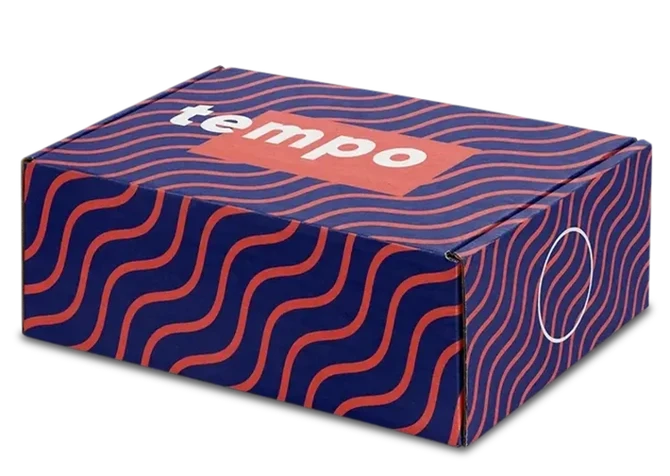
Mailer Boxes (Roll End Tuck Front): These are popular for the unboxing experience (Tier 1 FFP). They are self-locking and durable due to double walls on the sides. However, for SIPP compliance, you must seal the front flap with tape or a wafer seal to prevent it from popping open during transit.
Best for: Subscription kits, cosmetics, supplements, clothing, small tech accessories, and gift sets where presentation matters.
You can learn more about this style on our Mailer Box page.
2. ECT Ratings (Edge Crush Test)
The Edge Crush Test (ECT) measures the stacking strength of corrugated board. Since your product will likely be at the bottom of a stack in a delivery truck, choosing the right ECT is critical to prevent crushing.
| Product Weight | Recommended Board Grade | Application |
|---|---|---|
| Under 20 lbs | 32 ECT (Single Wall) | The standard for most e-commerce shipments. Sufficient for lightweight items like beauty products, apparel, or toys. |
| 20 - 40 lbs | 44 ECT (Single Wall) | A heavy-duty single wall. Highly recommended for SIPP packaging in this weight class to ensure the box doesn't buckle without an outer container. |
| 40+ lbs | 48 ECT (Double Wall) | For heavy items like furniture or fitness equipment, double wall board is often necessary to pass the drop and vibration tests without corner damage. |
Note: While 32 ECT is the industry standard, we often recommend upgrading to 44 ECT for SIPP-certified packaging to provide that extra margin of safety against chargebacks.
3. Flute Profiles
The "flute" refers to the wavy arch between the linerboards. The size of the arch determines the balance between protection and print quality.
- E-Flute (approx. 1/16" thick): This is standard for Mailer Boxes. It creates a sleek profile with a superior surface for high-resolution printing. SIPP Note: Because it is thinner, E-flute is best suited for lighter, non-fragile items when shipping without an outer box.
- B-Flute (approx. 1/8" thick): This is standard for Shipping Boxes. It strikes the perfect balance between structural integrity and printability. It resists crushing effectively during transit, making it a reliable default for most SIPP-certified shipments.
- C-Flute (approx. 11/64" thick): The best option for cushioning. Being thicker than B or E, C-flute offers greater shock absorption. It is the recommended choice for breakable, fragile, or heavy items that need an extra layer of buffer against drops and impacts in the Amazon fulfillment network.
Still not sure which combination is right for your product?
Choosing the right structure, strength, and flute profile can be tricky. Contact our team and we can help you select the exact specifications needed to pass Amazon's testing requirements.
Testing Requirements
Amazon requires packaging to pass the ISTA 6-Amazon.com test protocol. Depending on your product type, you can either:
Self-Testing (for non-fragile products):
- Perform drop tests according to Amazon's guidelines
- Document results with photographs (5 photos required for corrugated packaging)
- Evaluate for visible damage, functionality loss, seal integrity, and customer acceptability
- Submit results through Seller Central or Vendor Central
ISTA-6 Lab Testing (required for):
- Fragile products
- Products containing liquids
- Items with sharp edges
- Products with motorized parts
Testing must be conducted through an ISTA-certified lab from Amazon's APASS (Amazon Packaging Support and Supplier) Network.
Product Grouping for Certification
You don't need to test every single SKU individually. Amazon allows product grouping for certification purposes. Products can be grouped if they share similar:
- Size (within 25% variation)
- Weight (within 25% variation)
- Material composition
- Packaging structure
- Pack quantity
If your primary (heaviest/largest) product in a group is certified, secondary variations can often be certified without additional testing.
How to Get Your Products SIPP Certified: Step-by-Step
Step 1: Review Your Product Portfolio
Start by identifying which products fall under mandatory certification requirements (>18" × 14" × 8" or >20 lbs). Then prioritize high-volume SKUs where chargebacks are eating into your margins.
Step 2: Assess Your Current Packaging
Evaluate your existing packaging against SIPP requirements:
- Is it six-sided and rectangular?
- Are all materials curbside recyclable?
- Can customers open it within 120 seconds?
- Will it survive a 3-foot drop test?
- Are there any prohibited materials (wire ties, clamshells, styrofoam)?
Step 3: Design or Redesign Your Packaging
This step is where most sellers run into trouble. Your packaging must balance:
- Protection: Survive Amazon's fulfillment network without an overbox
- Compliance: Meet all SIPP material and structural requirements
- Branding: Look great when it arrives at the customer's door
- Cost efficiency: Right-sized to minimize dimensional weight charges
Step 4: Test Your Packaging
Conduct self-testing or arrange ISTA-6 lab testing depending on your product type. Document everything, as you'll need this for enrollment and potential chargeback disputes.
Step 5: Enroll Through Seller Central or Vendor Central
- Navigate to the SIPP enrollment page
- Search for your ASINs
- Submit test results and documentation
- Await certification confirmation
Step 6: Monitor Performance
Certification isn't permanent. Amazon can decertify products if:
- Damage rates exceed 5% when shipped SIPP
- Packaging non-compliance rates exceed 5%
- Inbound packaging doesn't match certified specifications
Regularly review your operational performance metrics in Seller Central.
Common SIPP Certification Mistakes (And How to Avoid Them)
Mistake #1: Designing for Retail, Not E-commerce
Traditional retail packaging is designed to look good on a shelf. E-commerce packaging needs to survive being thrown, dropped, stacked, and squeezed throughout Amazon's fulfillment network, then arrive looking great on a customer's doorstep.
Solution: Design packaging specifically for the e-commerce journey. Consider internal cushioning, reinforced corners, and materials that maintain structural integrity under stress.
Mistake #2: Oversized Packaging
Bigger isn't better. Oversized packaging means higher dimensional weight charges, more void fill needed, and greater risk of damage from products shifting during transit.
Solution: Right-size your packaging to fit your product with minimal clearance. Custom sizing pays for itself in reduced shipping costs and improved protection.
Mistake #3: Using Prohibited Materials
Wire ties, plastic clamshells, styrofoam peanuts, and shredded paper are all prohibited under SIPP guidelines. Many sellers don't realize these common materials will fail certification.
Solution: Switch to compliant alternatives like molded pulp inserts, corrugated partitions, or paper-based cushioning.
Mistake #4: Inadequate Sealing
Packages that pop open during fulfillment create compliance issues and damage risk. Auto-lock bottoms and tuck-top closures often need reinforcement.
Solution: Always add tape to closures, even on self-locking designs. Use quality pressure-sensitive tape that maintains adhesion under stress.
Mistake #5: Skipping the Testing Phase
Some sellers assume their packaging will pass without actually testing it. This is a recipe for certification denial and ongoing chargebacks.
Solution: Always test packaging before submitting for certification. Self-testing is straightforward for non-fragile items, so invest the time upfront to avoid problems later.
SIPP Certification Checklist
Before submitting for certification, verify your packaging meets these requirements:
Structural Requirements:
- Six-sided rectangular box construction
- Minimum dimensions: 6" × 4" × 0.375"
- No windows, cut-outs, or protrusions
- All edges properly sealed
- No staples used for sealing
Material Requirements (for Tier 1 FFP):
- 100% curbside recyclable materials
- No prohibited materials (wire ties, clamshells, styrofoam, etc.)
- Printing doesn't affect recyclability
Testing Requirements:
- Drop test completed and documented
- Product survives without visible damage
- Product maintains functionality
- Seals remain intact
- Photos taken of all sides post-test
Labeling Requirements:
- Space for 6" × 4" shipping label on flat surface
- Scannable barcodes visible through packaging or on exterior
- Content and handling instructions visible
General SIPP Program Questions
What exactly is the Ships in Product Packaging (SIPP) program?
SIPP allows Amazon selling partners to ship customer orders in their own branded packaging without Amazon adding any additional materials. When your product is SIPP certified, it goes directly from the fulfillment center to the customer's door in your box, not Amazon's.
Is SIPP the same as Frustration-Free Packaging (FFP) and Ships in Own Container (SIOC)?
Yes. Amazon rebranded the program to "Ships in Product Packaging" in 2024, but FFP and SIOC still exist as certification tiers within SIPP. You'll see all three terms used in Amazon's documentation and Seller Central.
Do certifications expire?
No, certifications don't have an expiration date. However, Amazon can decertify products if damage rates exceed 5% when shipped SIPP, or if non-compliance rates exceed 5%. When decertification happens, vendors get a 60-day grace period to fix the packaging and recertify.
Eligibility and Requirements
Which products are required to be SIPP certified?
Products with packaging dimensions greater than 18" x 14" x 8" OR weighing more than 20 lbs must be certified as SIPP. Products that don't meet these thresholds can still be certified voluntarily to receive fee discounts.
What are the minimum packaging dimensions?
All SIPP-certified packaging must be at least 6" x 4" x 0.375" to accommodate Amazon's standard shipping label. Products with packaging smaller than this are currently ineligible for certification.
Are any products excluded from the program?
Yes. Excluded categories include hazmat items with transportation requirements, Amazon Fresh products, and certain other specialty categories. Check Seller Central for the complete exclusion list.
What's the difference between corrugated and flexible SIPP packaging?
Corrugated SIPP packaging includes six-sided boxes. Flexible SIPP packaging includes poly bags, paper bags, and padded mailers with material at least 2mm thick. Both have specific testing requirements.
Testing and Certification
Can I self-test my packaging or do I need lab testing?
It depends on your product. You can self-test if your product is non-fragile, does not contain liquids, does not contain sharp items, and is not granular with diameter less than 1". If your product is fragile, contains liquids, or has sharp items, you must get an ISTA-6A lab test from an approved lab in Amazon's APASS network.
What does self-testing involve?
Self-testing requires drop tests from specific heights based on your product weight, followed by evaluation and photo documentation. For corrugated packaging, you need 5 post-test photos. For flexible packaging, you need 6 photos plus a material strength test.
What makes a product "fail" the self-test?
Your product fails if it shows visible damage or breakage, loss of function or utility, compromised seal or tape breakage, or any wear on inner or outer packaging that customers would find unacceptable.
Do I need to test every single SKU?
No. Amazon allows product grouping, so one test report can certify multiple similar ASINs. Products can be grouped if they share similar size (within 25% variation), weight (within 25% variation), material composition, packaging type, product-to-packaging ratio, and pack quantity.
How do I enroll products in SIPP?
The process has four steps: review SIPP guidelines and update your packaging design, group similar ASINs together, test your packaging (self-test or ISTA-6 lab test), and enroll through the SIPP portal in Seller Central.
Fees and Design
What are the chargeback fees for non-compliant packaging?
As of January 2025, chargebacks range from $1.80 to $4.40 per unit based on product shipping weight. See the full fee table in the "True Cost of Non-Compliance" section above.
Can my packaging have windows or cut-outs?
No. SIPP-compliant packaging cannot have windows, cut-outs, or protrusions. The only exception is hand holes for carrying, which are limited to 3.5" x 1.0" maximum.
What materials are allowed for Tier 1 (FFP) certification?
Tier 1 requires 100% curbside recyclable materials. Accepted materials include corrugated cardboard, paper-based materials, and plastics marked with SPI codes 1 (PET), 2 (HDPE), and 5 (PP). Printing and coatings cannot affect recyclability.
How Packwire Helps You Achieve Amazon FBA Compliance
Amazon FBA packaging requires balancing protection, compliance, branding, and cost all at once. A few things about how we work make this easier.
Low Minimums for Testing and Iteration
With order minimums as low as 10 units, you can test your SIPP-compliant packaging design before committing to larger quantities. This is critical for Amazon certification because you need actual samples to conduct drop tests and submit for enrollment. Traditional packaging suppliers often require thousands of units minimum, making iteration expensive and risky.
Custom Sizing for Right-Fit Packaging
Off-the-shelf boxes rarely fit products perfectly. Our Mailer Boxes and Shipping Boxes can be customized to your exact dimensions, reducing:
- Dimensional weight shipping charges
- Void fill requirements
- Product movement and damage risk
- Material waste
Right-sized packaging often qualifies for better SIPP certification outcomes because products don't need additional cushioning to prevent shifting.
Recyclable Materials That Meet Tier 1 Standards
Our corrugated packaging is made from at least 50% recycled content and is 100% recyclable, meeting Amazon's Tier 1 Frustration-Free Packaging material requirements. You don't need to worry about material compliance when working with us.
US-Based Production for Speed and Reliability
Amazon's certification process requires physical samples for testing and enrollment. Our US-based production means faster turnarounds when you're iterating on packaging designs or need to quickly pivot after a failed test. You're not waiting weeks for overseas shipments while chargebacks pile up.
Full-Color Digital Printing for Brand Impact
SIPP-certified products arrive directly in your packaging, with no Amazon overbox hiding your brand. Our 6-color digital printing ensures your packaging makes the brand impression it should, with vibrant colors and precise PMS matching on most orders.
Design Support When You Need It
Not sure how to translate SIPP requirements into an actual package design? Our team reviews every order before production to ensure your artwork and specifications will deliver the results you expect.
Get Started with SIPP-Compliant Packaging
Amazon's packaging requirements will only get more stringent as the platform continues to prioritize sustainability and customer experience. Getting compliant now protects your margins and signals to Amazon (and customers) that you're a professional, reliable seller.
Whether you need custom Mailer Boxes for smaller products or Shipping Boxes for larger items, we can help you design packaging that meets Amazon's SIPP requirements while putting your brand front and center.
Explore our custom boxes to see sizing options and start designing, or contact us to discuss your specific Amazon FBA packaging needs. We're happy to help you figure out the right approach for your products.
